
Durable Carton Box Plastic Handles for Secure Easy Carrying
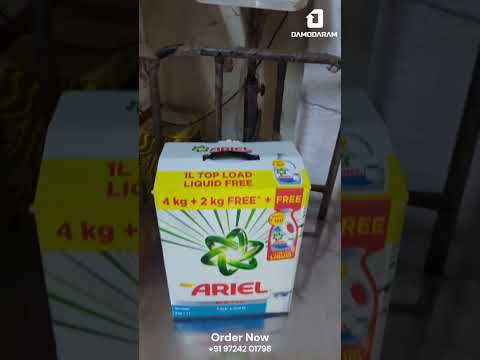
A single plastic handle can reduce the stress on a carton box’s side panels by over 40%, preventing sudden collapse during transport. This handle works by embedding a robust, flexible strap into the box’s closure, distributing the load’s weight evenly across the reinforced flap. To use it, simply punch out the die-cut perforations and fold the handle outward, ensuring the tape-secured flap is fully sealed for maximum tear resistance. Its primary benefit is a secure, ergonomic grip that allows for safe, single-handed carrying of heavy loads.
Why Retailers Are Switching to Carrier-Friendly Packaging
Retailers are switching to carrier-friendly packaging by integrating the carton box plastic handle to improve the customer’s carrying experience. This handle eliminates the need for a separate shopping bag, allowing the box itself to serve as the primary transport vessel. By molding the plastic handle directly into the carton, the package becomes easier to grip and balance, reducing the risk of dropping heavy or awkward loads. This design also speeds up the checkout process because associates no longer need to bag items, and customers appreciate not having an extra bag to manage. The handle transforms a standard box into a practical, ready-to-carry unit, directly addressing the real-world need for convenient, one-handed portability from store to car or home.
The Surge in E-Commerce and the Demand for Portable Boxes
The surge in e-commerce directly drives demand for portable boxes, as online retailers require packages that facilitate easy transport by delivery personnel and customers. A carton box with a plastic handle addresses this need, eliminating the struggle of carrying multiple smaller parcels or ungainly large containers. This design prioritizes ergonomic portability, reducing strain for handlers navigating doorsteps and apartment complexes. Consequently, portable e-commerce packaging with integrated handles becomes essential for practical logistics, ensuring items move smoothly from warehouse to doorstep without requiring additional bags or straps.
Q: How does e-commerce growth affect the need for portable boxes?
A: It creates direct demand for boxes that can be carried comfortably, as every single parcel now becomes a handheld item for delivery agents or recipients.
Ergonomics as a Differentiator in the Unboxing Experience
Ergonomics directly elevates the unboxing experience, turning a mundane task into a seamless interaction. A well-integrated plastic handle on a carton box provides balanced load distribution, preventing awkward tugs and spills before the product is even revealed. This tactile comfort and balanced carry signals premium design, while a flimsy or poorly placed handle creates user frustration. The difference is stark: a handle that aligns with natural grip paths versus one that strains the fingers.
| Awkward Handle | Ergonomic Handle |
|---|---|
| Causes wrist twist | Encourages neutral wrist posture |
| Digs into palm | Distributes weight evenly |
| Requires two hands | Offers controlled one-hand carry |
This focus on comfort directly increases perceived value and brand loyalty from the first touch.
Anatomy of a Plastic Carry Handle Assembly
The plastic carry handle assembly for a carton box begins with a rigid polypropylene core, often reinforced with ribs to prevent flex under load. This core is molded around a flexible polyethylene strap that threads through the box’s side slots; the strap’s ends are heat-staked into the handle’s base, creating a permanent bond. A snap-fit bridge then locks the strap against the core, distributing weight evenly. In real use, the handle’s curved underside fits a palm’s contour, while the trap-like button on the opposing side clicks into the box’s pre-cut slit, anchoring the assembly during a carry. Friction points on the strap are textured to reduce slippage when lifting a heavy carton.
Common Materials: Polypropylene, Nylon, and ABS Options
Polypropylene, Nylon, and ABS each bring distinct advantages to a carton box plastic handle assembly. Polypropylene is the budget-friendly workhorse, offering excellent fatigue resistance for repeated flexing without cracking. Nylon delivers superior tensile strength and impact toughness, ideal for heavy loads where the handle must withstand sudden stress. ABS balances rigidity and surface finish, resisting impacts while supporting crisp, ergonomic contours for comfortable grip. Each material’s inherent thermal stability influences mold design and cycle times, directly affecting handle consistency.
- Polypropylene excels in living hinge applications, reducing failure at folding points.
- Nylon absorbs moisture over time, which can slightly alter dimensional stability in humid environments.
- ABS provides a scratch-resistant, glossy surface that resists cosmetic wear during packaging transport.
Handle Types: Die-Cut, Attached, and Retractable Styles
Within a carton box plastic handle assembly, the handle type dictates user interaction and box design. A die-cut handle is a simple opening punched directly into the box flap, offering no added plastic but requiring finger space. An attached plastic handle is a separate, rigid or flexible strap riveted or welded to the box surface, providing a reinforced grip for heavier loads. Retractable styles feature a plastic handle that slides or folds flush into a housing on the box when not in use, maintaining a flat surface for stacking and shipping.
- Die-cut styles require no additional materials but reduce box integrity if overloaded.
- Attached handles are permanently fixed, distributing weight directly to the box panel.
- Retractable handles offer a tamper-proof, space-saving solution for reuse.
Reinforcement Methods for Heavy-Duty Loads
For heavy-duty loads, the handle assembly integrates a steel insert molded directly into the polypropylene core, preventing pullout under extreme tension. A secondary method uses cross-ribbed gussets that transfer shear stress from the handle bore to the carton’s sidewall, distributing weight evenly. Additionally, double-wall anchor plates sandwich the cardboard, eliminating tear-through failure. Finally, a textured grip surface with raised diamond patterns reduces slippage, ensuring the user maintains control under maximum load.
- Molded steel insert for pullout resistance
- Cross-ribbed gussets for stress distribution
- Double-wall anchor plates to prevent tear-through
- Textured diamond grip for load stability
Key Functional Benefits of Adding a Carry Grip
A carry grip transforms a bulky carton box into a single-hand portable load. The key functional benefit is superior weight distribution and leverage, as the plastic handle shifts the center of gravity to your palm, reducing strain on fingers. This allows for safer, controlled lifting of heavy contents without box deformation. Question: Why does a carry grip improve balance? Answer: Because the rigid handle provides a fixed pivot point, preventing the box from tilting and spilling items during transit. The result is effortless maneuvering through tight spaces.
Reducing Strain During Manual Transport
A carry grip minimizes direct hand-to-box compression by redistributing the load across the finger’s stronger flexor tendons, reducing the localized strain on palm tissue and finger joints. This biomechanical shift lowers the forearm muscle tension required for a crushing grip, allowing the wrist to remain in a neutral, less fatiguing alignment. The reduction in repetitive micro-movements during lifting also slows the onset of cumulative fatigue in the biceps and shoulders. By converting a potential pinch grip into a power grip, the handle directly decreases the physical effort per transport cycle, enabling longer handling intervals before rest becomes necessary.
Preventing Box Collapse Under Weight
A carry grip directly prevents box collapse under weight by distributing the load from the handle’s attachment points across the carton’s reinforced structural seams, rather than concentrating stress on the thin board. The handle’s rigid bridge bridges the cutout, transferring shear forces into the top flaps and side panels, which are designed to bear vertical pressure. This prevents catastrophic sidewall buckling when lifting heavy loads, as the plastic reinforcement acts as a load-bearing beam instead of relying on the box’s perforated surface. Without this redistribution, unsupported slots would propagate tears, causing the container to fail.
Enabling Single-Handed Product Handling
A carry grip makes single-handed product handling effortless, freeing your other hand for keys, doors, or your phone. Instead of awkwardly clutching a bulky box with two arms, you simply hook the handle with one or two fingers. This allows you to tilt, slide, or stack the box with minimal strain. To get the hang of it:
- Slide your hand under the grip and curl your fingers around it.
- Lift straight up, letting the carton’s weight balance naturally.
- Use your free hand to steady the bottom when placing or repositioning.
Design Considerations for Corrugated Boxes with Handles
When designing a corrugated box with a plastic handle, the primary consideration is the balance between handle cutout placement and box rigidity. You want the handle slot positioned high enough on the panel so the box doesn’t tip when carried, but not so close to the top edge that the corrugated board tears under load. A plastic handle typically requires a reinforced mounting area—usually via double-wall board or a glued-in patch—to stop the plastic from ripping through the paper material. The handle’s weight rating must match the box’s intended contents; a common mistake is using a light-duty plastic handle on a heavy corrugated box, causing the tabs to snap or the slot to deform. Also, ensure the handle’s opening is wide enough for gloved hands, yet narrow enough that the box’s structural flap (if any) remains intact for stacking. Slot depth and the plastic’s flex point should align so the handle sits flush when not in use.
Weight Distribution and Tear-Out Resistance
Effective handle design hinges on the interplay between weight distribution and tear-out resistance. Stress concentration around handle cutouts directly precipitates material failure when a box is lifted. To mitigate tear-out, a plastic handle must be anchored across reinforced panels, such as the center seam, to dissipate the load vector away from the die-cut edges. Wider handle straps or integrated reinforcement flaps reduce localized pressure, distributing the total weight across a larger cardboard surface area. This balanced load path prevents the sudden shearing of fibers that occurs when force is isolated to a single pivot point beneath the plastic grip. Consequently, the handle’s structural integrity depends entirely on its ability to convert vertical lift into horizontal tension along the box’s strongest axis.
Rigid vs. Flexible Attachment Mechanisms
For carton box plastic handles, rigid attachment mechanisms use molded snap-fits or rivets, locking the handle firmly to prevent wobble during heavy lifting. This design transfers load directly into the corrugated panel, minimizing flex but requiring precise alignment holes. In contrast, flexible mechanisms employ webbing or pivoting tabs that allow the handle to rotate flat against the box when not in use. This reduces stress on a single point and accommodates slight misalignment. To choose between them:
- Assess load weight: rigid for over 30 lbs, flexible for lighter or irregularly packed boxes.
- Evaluate user grip path: rigid offers fixed hand position; flexible self-adjusts to carrying angle.
- Consider storage needs: flexible collapses for stacking; rigid protrudes permanently.
Automated vs. Manual Handle Installation
Automated handle installation uses machinery to feed and attach pre-formed plastic handles to corrugated blanks at high speed, which requires handles to be supplied on a continuous reel or in precisely nested stacks. Manual installation relies on workers to pick individual handles, thread them through die-cut slots, and secure the ends, offering flexibility for short runs or irregularly carton box plastic handle shaped boxes. Automated vs. manual handle installation determines the required handle design: automated systems demand consistent handle rigidity and slot alignment to avoid jams, while manual processes tolerate more variation. The sequence typically follows:
- Select handle type based on production volume—automatic for high throughput, manual for custom orders.
- Design box slot dimensions to match the chosen installation method’s tolerance.
- Test handle feed reliability before full production.
Switching from manual to automated often requires retooling both the handle supplier and the box die-cut pattern.
Cost and Logistics Impact of Handle Integration
Integrating a plastic handle directly into the carton box during manufacturing eliminates separate handle procurement and manual attachment, cutting per-unit assembly costs substantially. This streamlined process reduces packaging line labor and speeds throughput, lowering your operational overhead. The logistics benefit is most pronounced in reduced freight damage, as the molded handle forms a structural part of the box rather than a weak add-on. However, storage and shipping of pre-assembled boxes with protruding handles increases pallet spacing, potentially raising cube costs by 8–12%. Careful handle design—like recessed or flat-fold profiles—can mitigate this volumetric penalty without sacrificing ergonomic function. Ultimately, the upfront tooling investment for handle integration is offset by long-term gains in packing speed, reduced labor, and fewer returns from torn handles.
Upfront Material and Tooling Expenses
Integrating plastic handles into carton box production requires significant upfront investment in custom injection molds, which typically costs $5,000–$30,000 per cavity based on handle complexity. This tooling expense must be justified by projected volume, as per-unit material costs for polypropylene or nylon directly depend on mold amortization. The sequence of planning these expenses follows a clear progression:
- Designing the handle geometry to minimize mold complexity, reducing tooling price.
- Confirming material compatibility (e.g., tensile strength for load) to avoid prototype re-runs.
- Ordering steel molds with multi-cavity layouts if annual volume exceeds 500,000 units, lowering per-part tooling overhead.
These upfront costs directly dictate the viability of handle integration versus alternative fastening methods.
Changes in Shipping Cube and Freight Efficiency

Integrating a plastic handle fundamentally alters the carton’s shipping cube, reducing usable pallet space. A protruding handle forces a mandatory 1–2 inch gap between stacked boxes, expanding the total volume required per unit. This cubic inefficiency directly lowers freight density, increasing per-container transportation costs. For efficient freight consolidation, optimized handle design for flush stacking is critical. Even a minor design adjustment—such as recessing the handle into the box’s wall—restores tight pallet fit, maximizing cube utilization and driving down per-unit shipping expenses.

Return Rate Reduction from Better Portability
A sturdy plastic handle makes a carton box far easier to carry one-handed, which directly cuts return rates. Customers who can comfortably lift and maneuver their purchase are far less likely to damage the package or contents en route to their car or home. This fewer damaged goods from easy handling means fewer refund requests and replacement shipments, saving the retailer significant reverse logistics costs. When a box also balances well in hand, spills or drops are rare, further reducing the chance of a frustrated customer initiating a return.
A better grip and balanced carry from a handle mean fewer dropped boxes, less damage, and a clear drop in product returns.
Eco-Friendly Alternatives to Traditional Plastic Handles
For the humble carton box plastic handle, switching to eco-friendly alternatives is immediately impactful. Recycled cardboard handles, formed from the same corrugated material as the box, eliminate mixed-material waste entirely, allowing the whole package to compost or recycle as one. Biodegradable bioplastics, derived from cornstarch or sugarcane, offer the same robust cutout or punch-out functionality as petroleum-based versions but break down safely in industrial facilities. Another dynamic option is a reinforced paper tape loop, which adheres directly to the carton’s surface, providing a sturdy grip without any plastic clip. These swaps deliver the same reliable carrying strength while drastically reducing your package’s long-term environmental footprint.
Biodegradable Polymer and Plant-Based Resin Options
Biodegradable polymers, such as polylactic acid (PLA) derived from corn starch, offer a drop-in replacement for conventional plastic handles on carton boxes, though they require specific composting conditions to break down. Plant-based resin options, like those from soy or castor oil, provide greater moisture resistance for frequent handling but degrade slower in landfills. When selecting between them, consider the handle’s expected lifespan: compostable PLA handles suit single-use boxes, while tougher plant-based resins fit reusable designs. A clear sequence for evaluation is:
- Determine if the box will be industrially composted or discarded in general waste.
- Assess humidity exposure during transport.
- Verify the resin’s tensile strength against the box load.
The biodegradation rate varies widely by material, so match it to your disposal infrastructure.
Recyclable Attachment Systems and Mono-Material Designs
Modern carton handles now integrate mono-material designs where the entire attachment, from the anchor plate to the strap, uses a single polymer type like HDPE or PP. This eliminates the need to separate mixed plastics during recycling. Recyclable attachment systems simultaneously replace metal rivets or adhesives with snap-fit tabs or interlocking grooves that lock permanently into the cardboard. When the carton is discarded, this unified handle detaches cleanly or stays bonded, allowing the entire assembly to flow directly into a closed-loop recycling stream without disassembly or material sorting.
Reusable Handle Clips for Multi-Trip Packaging
Reusable Handle Clips for Multi-Trip Packaging transform a standard carton by snapping onto existing box flaps, creating a durable grip that survives multiple shipping cycles. Unlike single-use plastic straps, these clips slide off and reattach to fresh boxes, cutting waste without sacrificing strength. Their clever friction-fit design means you can transfer the same clip from a returned package to a new outgoing shipment in seconds.
- Clips feature a reinforced locking mechanism that withstands repeated lifting of heavy loads
- Compact shape allows storage inside collapsed boxes between uses
- Smooth contoured edges prevent hand strain during frequent handling
- Snap-on installation requires no tools or adhesives
Industry Applications and Use Case Examples
In e‑commerce fulfillment, heavy‑duty corrugated boxes with integrated plastic handles replace taped hand holes for larger orders, reducing worker strain during packing and shipping. For retail point‑of‑sale displays, retailers specify perforated plastic handle boxes that allow consumers to carry multipacks of beverages or pet food directly from the shelf to the car, eliminating extra bags. Warehouses standardize on reinforced die‑cut handles for high‑volume picking of subscription box contents, where operators grab and load dozens of units per hour. Designing the handle flap’s slot depth and material thickness to match box weight prevents tearing during wet or cold delivery conditions. In automotive parts logistics, custom plastic‑handle cartons enable technicians to one‑hand carry heavy brake kits while holding tools in the other hand, improving safety and speed on busy service floors.
Paint and Hardware Buckets with Integrated Grips
In paint and hardware buckets, integrated grips replace the carton box plastic handle by being molded directly into the bucket sidewall or lid. These built-in carrying solutions distribute weight evenly across the hand, reducing fatigue during transport of heavy liquids or fasteners. The handle is sealed into the bucket polymer during manufacturing, eliminating detachment risk common with retrofit handles. This design suits messy environments where a removable carton handle would collect residue, and it saves warehouse space by removing separate handle inventory.
Paint and hardware buckets with integrated grips offer a permanent, ergonomic carrying solution that eliminates handle detachment and chemical residue buildup, ideal for heavy-duty use.
Subscription Box and Meal Kit Delivery Solutions
Subscription boxes and meal kit delivery solutions rely on carton box plastic handles to improve customer convenience during transit and at the doorstep. The handle, typically a rigid polypropylene insert, allows subscribers to carry bulky or unbalanced boxes—like those containing glass jars in meal kits—without the bottom collapsing. For recurring shipments, the handle’s durability prevents tearing after repeated use, which is critical for weekly meal kit deliveries. The handle design must accommodate varying box sizes and weights without increasing packaging assembly time for subscription fulfillment teams. Subscription box brand perception improves when a sturdy handle facilitates easy transport, reducing product damage reports.
For subscription box and meal kit solutions, the plastic handle ensures secure, user-friendly carrying for recurring, weight-variable deliveries, directly impacting customer retention.
Bulk Retail Display Packaging for Large Items
For large retail items like garden tools or bulk pet supplies, bulk retail display packaging relies on the carton box plastic handle to convert cumbersome cartons into portable, shopper-friendly units. The handle is integrated directly into the heavy-duty corrugated box, eliminating the need for additional carry bags. The practical sequence is: first, the box is designed with reinforced die-cut slots; second, the plastic handle is inserted and locked into these slots; finally, the large carton is filled and sealed, ready for floor display. This single handle transforms an otherwise unwieldy bulk package into a grab-and-go purchase.
Common Failures and How to Engineer Around Them
The most common failure is the handle ripping clean out of the box flap when the load is swung, usually because the plastic tab is too short. I engineer around this by extending the locking tab deep into the corrugation, creating a wide, internal spreader bar that distributes the shear force across two solid inches of board. Another failure is the handle snapping at the grip’s hinge during a sudden drop, so I specify a living hinge with a radiused fillet and a thicker spine, allowing it to flex rather than fracture. The real nuisance, though, is a handle that feels stiff in cold weather and cracks on the first yank, which I solve by blending an elastomeric modifier into the polypropylene to retain impact strength at low temperatures. Finally, handles that pop off when the box is stacked rely on a barbed arrowhead design that physically locks into the die-cut slot with a tactile click, resisting vertical sheer from above.
Handle Detachment Under High-Temperature Conditions
When a carton box plastic handle is exposed to elevated temperatures, adhesive softening and material creep directly cause detachment. To engineer around this, select handles molded from heat-stabilized polypropylene that maintains structural rigidity up to 90°C. Integrate through-hole rivets rather than relying solely on adhesive bonds, as mechanical fasteners remain secure when heat degrades glue. For extreme environments, specify a co-molded silicone grip that insulates the user’s hand and reduces thermal transfer to the anchor points.
- Use heat-stabilized polypropylene to prevent creep deformation above 70°C.
- Replace adhesives with ultrasonic welding or stainless steel rivets for thermal reliability.
- Add a reflective foil layer between handle and box to deflect radiant heat.
- Increase wall thickness at attachment points to distribute thermal load evenly.
Shearing and Tearing at the Punch-Out Points
Shearing and tearing at the punch-out points occurs when the plastic handle’s stamped edge cuts into the cardboard like a dull blade under load. This failure is common with thin, brittle handles or poorly aligned die-cuts. To engineer around it, reinforce the punch-out geometry with rounded corners instead of sharp 90° angles, which distribute stress and prevent crack initiation. Use a thicker, more flexible plastic grade to absorb shock without fracturing. Adding a small stress-relief notch adjacent to the punch-out redirects tear forces away from the primary load path.
Why do punch-out points shear even when the handle seems strong? The cardboard’s fibrous structure acts as an abrasive; repeated tilting of the handle focuses shear forces at the die-cut edge, causing micro-tears that grow into a full rip. Switch to a tapered punch-out to reduce contact pressure.
Incompatibility with Automated Palletizing Systems
Automated palletizing systems often fail when a carton box plastic handle protrudes asymmetrically, snagging gripper arms or disrupting vacuum suction seals. The handle’s flexibility can cause it to fold under compression, misaligning the box in the robotic stack. Even a 2-millimeter shift in handle alignment can cascade into a jam that halts the entire line for recalibration. Engineering around this problem involves recessing the handle into a die-cut pocket or using a low-profile ribbon design that stays flush with the box surface. Q: Why do automated palletizers reject boxes with protruding handles? A: Because the handle catches on suction cups or clamp rails, breaking the pick-and-place cycle and requiring manual intervention.
Testing Standards for Pull and Flex Resistance
Testing standards for pull resistance of a carton box plastic handle typically involve applying a static or dynamic load to the handle’s anchor points, measuring force until failure or a set threshold, such as 50 kg for 60 seconds. For flex resistance, standards assess the handle’s ability to withstand repetitive bending cycles, often using a fixture that cycles the handle 90 degrees multiple times. A critical detail is that the handle must not crack or detach after 1,000 flex cycles. These tests simulate real-world stress from carrying and lifting, ensuring the handle integrated into the box lid or sidewall does not separate from the carton board during use.
Static Load Testing for Sustained Carry
Static Load Testing for Sustained Carry checks if the plastic handle can hold a set weight for a defined period, like one hour, without failing. A weight, typically 1.5 times the box’s rated capacity, is hung from the handle. The handle must not crack, detach, or show permanent deformation. This simulates a long walk with your packed carton. The test ensures sustained carry reliability so the handle won’t snap mid-transit. If the handle passes, you can trust it for a heavy grocery run or moving box without sudden failure.
Dynamic Drop Impact Simulation
Dynamic drop impact simulation evaluates how the plastic handle and its attachment points withstand sudden, real-world fall forces. A weighted carton box is released from a set height (typically 60–120 cm) onto a hard surface in a controlled orientation, such as corner or edge drops. Accelerometers and high-speed cameras measure peak G-forces and handle deformation during the 5–10 millisecond impact. The test identifies handle cracking, staple pull-out, or rivet shearing thresholds. Pass criteria require no handle separation or loss of carton integrity after multiple drops from each prescribed face.
Environmental Chamber Aging Tests
Environmental chamber aging tests simulate long-term degradation of carton box plastic handle pull and flex resistance under controlled temperature and humidity cycles. The handle is subjected to specific aging protocols, such as 85°C/85% RH for 500 hours, to accelerate polymer embrittlement or plasticizer migration. The sequence is:
- Precondition handles at 23°C/50% RH for 24 hours.
- Expose to specified aging cycle (e.g., -20°C to 60°C, 5% to 95% RH).
- Conduct pull and flex tests immediately after removal.
The critical pass criterion is that aged handle elongation at break remains within 80% of unaged baseline values. Post-exposure results must show no cracking or delamination at the handle-carton interface.
Future Trends in Portable Corrugated Packaging
Future portable corrugated packaging will prioritize ergonomic handle integration with the box’s structural integrity, moving beyond simple add-on handles. Expect to see molded plastic handles that nest flush into the corrugated blank during manufacture, eliminating protrusions that snag during shipping. These handles will incorporate load-spreading flanges to prevent the tearing common with die-cut holes, while being fully recyclable via snap-off tabs.
The key innovation is a handle that acts as a rigid bracing element, reinforcing the box corners rather than just being a carry point.
Look for handles with textured grips designed for wet or greasy hands, and quick-release clips that allow the handle to be detached for recycling without cutting the box.
Smart Handles Embedded with RFID or QR Codes
Smart handles embedded with RFID or QR codes transform a standard carton box plastic handle into a dynamic data port. The handle itself becomes a touchpoint for instant inventory verification, allowing warehouse staff to scan the integrated code without separate labels. For logistics, a simple tap or scan of the handle reveals shipment contents and destination, eliminating manual data entry. This integration means the handle actively prevents misrouting, as the embedded chip or code links directly to the digital packing list. Further, a QR code on the handle can direct end-users to assembly video tutorials or recycling instructions, merging physical carry function with digital user guidance.
Moldable Bioplastic Handles for Ergonomic Fit
Moldable bioplastic handles for ergonomic fit represent a shift from rigid, one-size-fits-all solutions to user-adaptive contact surfaces. These handles utilize bio-based polymers that soften at body temperature, allowing the user’s grip to create a customized contour in the corrugated carton. The result is a custom-contoured carry surface that reduces pressure points and improves load stability. Unlike standard plastic handles, this adaptation occurs during the first use, with the material resetting upon cooling for consistent re-gripping. The bioplastic composition ensures full compostability, eliminating the need to separate the handle from the cardboard for recycling.
| Aspect | Moldable Bioplastic Handle | Standard Plastic Handle |
|---|---|---|
| Grip adaptation | Thermally conforms to hand anatomy | Fixed shape, no customization |
| Pressure distribution | Moldable contour spreads load unevenly | Uniform surface, potential hot spots |
| End-of-life handling | Compostable with corrugated box | Requires manual separation for recycling |
Modular Handle Systems That Adapt to Box Size
Instead of a one-size-fits-all grip, future boxes will feature adaptive handle docking stations built into the corrugated. You simply snap in plastic handle units of different lengths or widths, customizing the carry point to match the exact box dimensions. For a small shoebox, you click in a compact finger-loop; for a large moving carton, you attach a full-width strap system. This means you never wrestle with an awkward handle that’s too short or positioned wrong.
- Snap-in handle lengths that adjust to box width
- Interchangeable grip types (loop, strap, or rigid bar)
- Docking slots pre-cut in the corrugated for quick attachment